A new study shows that households can use electric cargo bikes to halve car miles – and a pilot scheme in Norwich is helping residents make the shift

A family participating in the ELEVATE experiment in 2023/24
What happens if you just give people electric cargo bikes?
This was the radical question researchers in Leeds, Brighton and Oxford set out to answer by lending e-cargo bikes to 49 households in suburban areas of their cities for a number of months in 2023 and 2024. The experiment with e-cargo bikes was part of a larger research project called ELEVATE that is exploring what is becoming known as e-micromobility (electrically powered devices like scooters, bikes and skateboards).
The researchers found that by using the e-cargo bikes the participants cut the distance they travelled in cars by 51%. The trial also helped convince some households that e-cargo bikes were right for them: by the end of 2024, no less than ten households had bought e-cargo bikes with their own money. The team published their findings in a paper in September, and Dr Ian Philips, the project lead and senior research fellow at Leeds University’s Institute for Transport, says he regards their work as “a positive message” for a form of mobility that is still in the early-adoption phase.
New rental scheme in Norwich
Rob Hampton, director of the Cambridge-based cycle retailer Outspoken Cycles, also believes there are a lot of people out there who could be convinced that an e-cargo bike is for them. This summer, Outspoken Cycles introduced an e-cargo bike rental scheme in nearby Norwich, even though it doesn’t have a shop in the city. The intention behind the initiative is to “grow the community”, as Rob says, and there is no expectation that participants are necessarily looking to purchase a bike from the company.
As Rob explained to me, his team realised that the outlay involved is such a significant one that households often need a while to figure out whether an e-cargo bike is really the right choice for them – and which model best fits their needs. The scheme saw strong uptake, with all bikes being lent out regularly over the summer months.
Britain certainly has some catching up to do in this field. Figures show that whilst there were just 4,000 electric cargo bikes sold in the UK in 2022, in Germany the figure was a striking 90,000 and in France it was 70,000. Dr Philips’s team also identified a high concentration of ownership in London, making their pilot in other, smaller cities insightful for assessing potential outside the capital. It is these cities that will be decisive for scaling up e-cargo bike adoption.
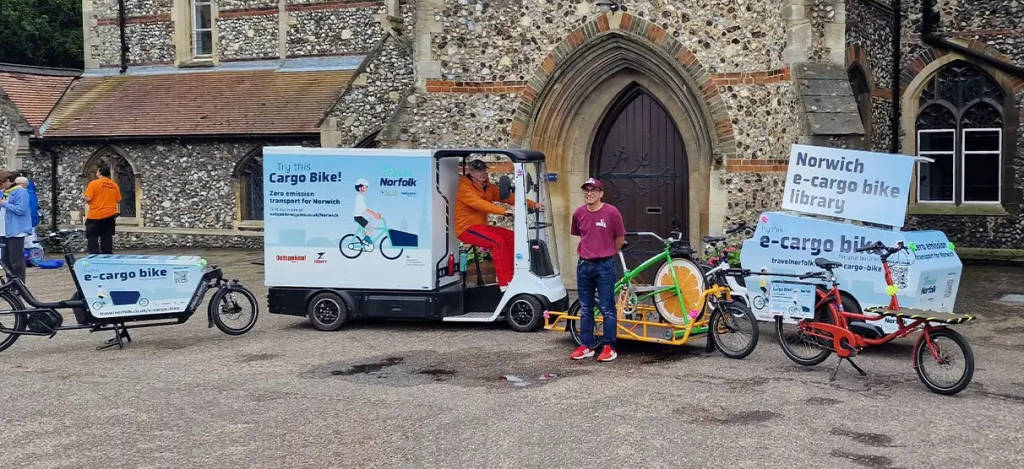
Outspoken Cycles has been running a scheme for businesses which recently finished; its family e-cargo bike scheme was launched in the summer.
A replacement for the second car
Whilst Outspoken’s Norwich scheme is new this summer, Rob told me they have been selling cargo bikes to the area for many years, and he has seen several cases where acquisitions have led to households selling their second car.
Liam, a former teacher from Norwich, regularly ferries his nine-year-old twins around in an e-cargo bike that starting life as a “non-e” cargo bike and was then electrified when he started struggling to get both kids up the hills. One year ago, Liam and his wife decided to take their second car off the road, as they weren’t using it anymore. When a friend asked him to transport a wardrobe recently, Liam simply turned up with his cargo bike and strapped it across the box up front.
The mobility mix
As Dr Philips is the first to admit, e-cargo bikes are not a mobility panacea. They are the right solution for “some households in some places”, as he puts it. This emphasis on place is shared by London-based transport consultant Thomas Ableman, who, together with his wife, runs the blog CarefreeCarfree.
For rural areas with poor public transport, reducing car miles can be a real problem, which is why Thomas mostly hopes to reach those living in higher-density areas. However, even in areas that are suited to e-cargo bike use, some people are still reluctant to consider it for other reasons.
Naegeen is an environmental officer at a local authority who lives in a terraced house just outside the centre of Norwich. On holiday in Copenhagen this spring with her husband and their one-year-old, Naegeen was happy to cycle around the city. “It was something about the number of people doing it; I just felt safe,” she says, “and of course the fact that there were dedicated cycle lanes certainly helped.”
Naegeen and her husband use their car daily, and whilst she would like to reduce the amount they use it, she says she would have to feel a lot safer in Norwich than she currently does in order to consider doing so through cycling.
But what about the cost?
Another potential barrier is the belief that e-cargo bikes are unaffordable. It’s one thing to participate in a funded research scheme, but quite another to shell out upwards of £5,000 to buy one of these machines yourself. Yet, when you do the maths of car ownership and e-cargo bike ownership over several years, the case is clear: a car is more expensive. Earlier this year, the Global Cycling Network ran an experiment and came to the conclusion that owning and running a car is four times more expensive than owning and running an e-cargo bike.
Dr Philips points out that for many families in financially precarious situations, the payments around their car can actually be a source of economic stress. If these families live in the right areas, e-cargo bikes might be a way to reduce car ownership and save money.
However, the academic also notes that we need to talk about the rich, given their larger carbon footprints and propensity to travel more. As he puts it, we need a two-pronged approach to equity: using creative mobility solutions to help working-class people save money, whilst also using them to get wealthy people to do their bit.
Mobility as freedom
So running an e-cargo bike is cheaper than a car. But maybe that extra cost is worth it just to have the convenience and, well, the freedom of driving? Talking to owners of e-cargo bikes, I get a very different impression.
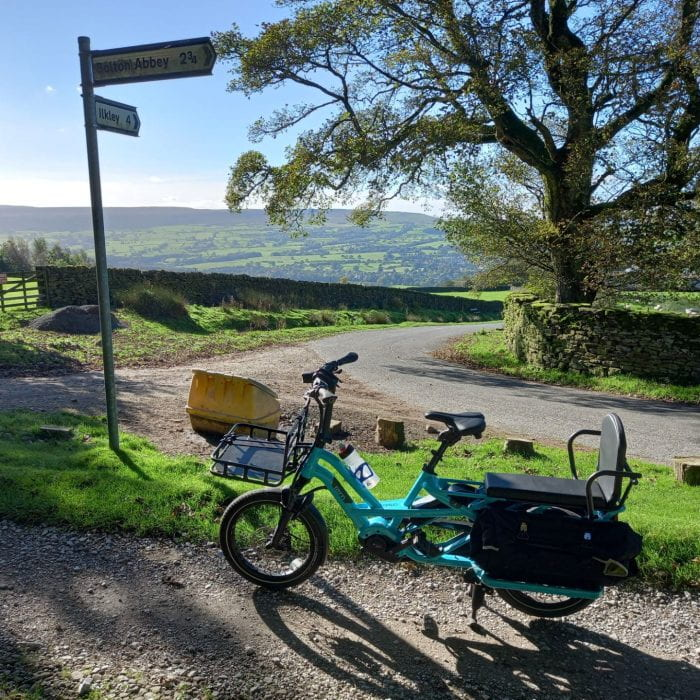
For Liam, freedom isn’t driving. For him, freedom is traveling around the city, seeing a shop, and deciding spontaneously to pull over to the side of the road, lock up his bike and go in. As he puts it: “In that sense, cycling is a lot like I guess driving was in the 1950s. Drivers still think they can move around like that, but they can’t; we cyclists can.”
As well as being spontaneous, cycling is also more predictable. Rowan, a carfree architect with two children, points out that with an e-cargo bike, when his phone says it will take fifteen minutes to get somewhere, then he knows he can be there in fifteen minutes; there will be no queues, and he won’t have to hunt for a parking space at his destination. “Cycling is just much more reliable,” he says.
It’s also physical activity. Dr Labib Azzouz of Oxford University, who supervised the ELEVATE project’s trials in his city, spoke with several participants with children who said that since becoming parents they’d had no time for exercise. Using the e-cargo bike in place of a car allowed them to incorporate exercise into their daily routine at little to no extra time cost.
It is this emphasis on the benefits of e-cargo bike usage over driving that feels key to accelerating behavioural change, rather than the more defensive rhetoric of trying to show that cargo bike usage “isn’t any worse” than driving a car.
Going carfree
Raising children without owning a car at all is the extreme, but, as Rowan demonstrates, it can work. The blogger Thomas Ableman says it’s about adopting a fundamentally new mentality, and changing deep-set habits. “You can’t get everywhere without a car, but do you really need to?” he asks. He points out that if places like the Isle of Man and West Cornwall can be visited very easily without a car, perhaps it doesn’t need to be somewhere as far-flung as the Outer Hebrides every summer.
Security is another classic reason cited for the supposed necessity of car ownership. However, on their blog, Ableman and his wife write about how on-demand cab-booking apps can provide that same sense of security: in an emergency, they are there. Car clubs such as the Enterprise Car Club are also a way to have access to a car without owning one.
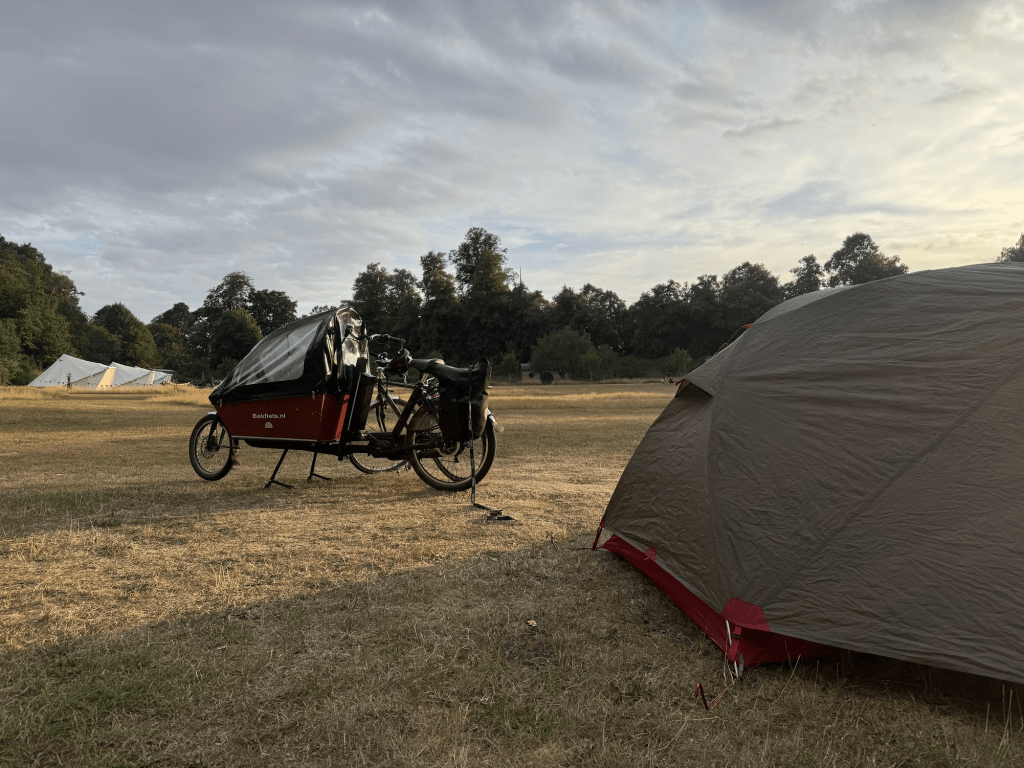
Rowan and his partner have access to his partner’s parents’ car (they actually own two, as Rowan is good enough to disclose to me), and they make use of it five or six times a year. When I ask him about his regrets not owning a car, Rowan turns the question on its head. In fact, he chuckles, his real regrets are the occasions when he and his partner “fall for the trap of thinking it will be easier with the car”. They seem to be learning, though: this summer they went camping with the kids and managed to fit everything into, and onto (!) the e-cargo bike.
New trips
Fascinatingly, the study also shows ways in which e-cargo bike usage goes beyond simply replacing car trips and in fact leads to households going on new trips altogether. In our conversation, Dr Azzouz cites one family who said that they used the e-cargo bike to go out for family rides in the evening after dinner, something they wouldn’t have chosen to do with a car. Other participants talked about trips to places which would involve parking, or traffic, meaning that doing the outing with a car would have been “too much faff”, as Dr Philips puts it, but doing it with the e-cargo bike becomes fun.
These kind of trips also chime with some of the more unexpected benefits participants cited in their feedback. Whilst many mentioned things like sustainability, convenience and health, some also mentioned a feeling of “conquest” – of having achieved something new in their lives – whilst others saw the e-cargo bike as a way to “escape” the day-to-day routine in their lives.
Dr Azzouz, who is currently exploring the nature of these new trips, sees a key area of e-cargo bike use in households with a “care element”. Caregiving often comes second to breadwinning when there is only one car available, and caregivers in the trial, frequently mothers, reported that having an e-cargo bike meant that they were independent of their partners and able to do fun things with the children during work hours.
It is precisely the non-mandatory nature of these trips that makes them so interesting, because it shows that e-cargo bikes can change how households approach mobility and place beyond a simplistic binary of car-to-bike shift.
Barriers
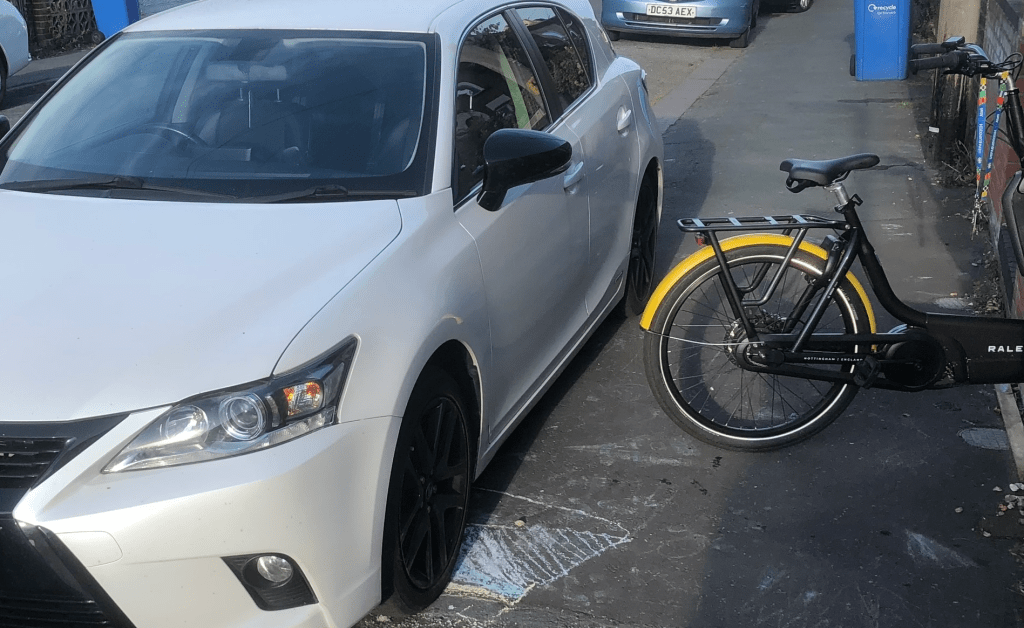
Of course, the study also details a fair list of barriers to e-cargo bike uptake. Some, such as better cycling infrastructure, are long hills to climb. Similarly, issues around parking and safe places to lock up e-cargo bikes require deep rethinking in planning and building practices.
Although the ELEVATE team gave all participants training in how to handle e-cargo bikes and tips on using them on roads, some still reported feeling insecure. Whilst interviewing the various families who have featured in this article, I got the impression that it’s a huge benefit to e-cargo bike uptake if cycling feels like second nature to you. This demonstrates the importance of cycling proficiency, particularly in early years, so that for future generations cycling feels like a natural choice for as many people as possible.
There are also cultural preconceptions that can be addressed. Dr Philip’s team showed that it is a misnomer that e-cargo bikes are a reserve of the rich, and studies such as the one mentioned earlier have shown that usage is cheaper than maintaining a car. Secondly, whilst more men purchase these bikes, when they are transporting children, they are more likely to be being ridden by women. Framing cycling as a form of transport for all, and not just lycra-clad men, is crucial to a democratising political project in cycling more broadly, but also to the uptake of e-cargo bikes.
Conclusion
So where does this leave us? Dr Philip’s team found that 11% of people not currently using an e-cargo bike said they could see themselves using one regularly. The fact that only 3% of English adults are using one regularly at the moment suggests potential for enormous growth in this market. Hopefully cycle retailers around the U.K. will see these figures and invest resources in more schemes to help encourage households to take the plunge.
Dr Azzouz praised the Norwich scheme from Outspoken Cycles, seeing it as exactly the “right kind of exposure” this form of mobility needs to escape the niche of eager cyclists and go mainstream.
Beyond the positive statistics, a clear takeaway from the research – and from my conversations with e-cargo bike owners – is that using e-cargo bikes is fun. Participants in the ELEVATE project commented on how easy it was to interact with their kids when cycling. They also reported high levels of interest from members of the public, with one participant saying that passersby often waved or even cheered them on.
My wife and I have an e-cargo bike and I frequently get friendly smiles from strangers as I pass by. A couple of weeks ago I was cycling our two children home from school when a man driving a white van stopped at a junction and remarked to me how wonderful it must be for the kids to be ridden around the city in this way. Such genuine enthusiasm about mobility is rare – and inspiring.
 Notes from Norwich // Notizen aus Norwich
Leave a comment